Pod mod vs sub-ohm kit: how these device categories actually differ
Last updated 10 September 2026
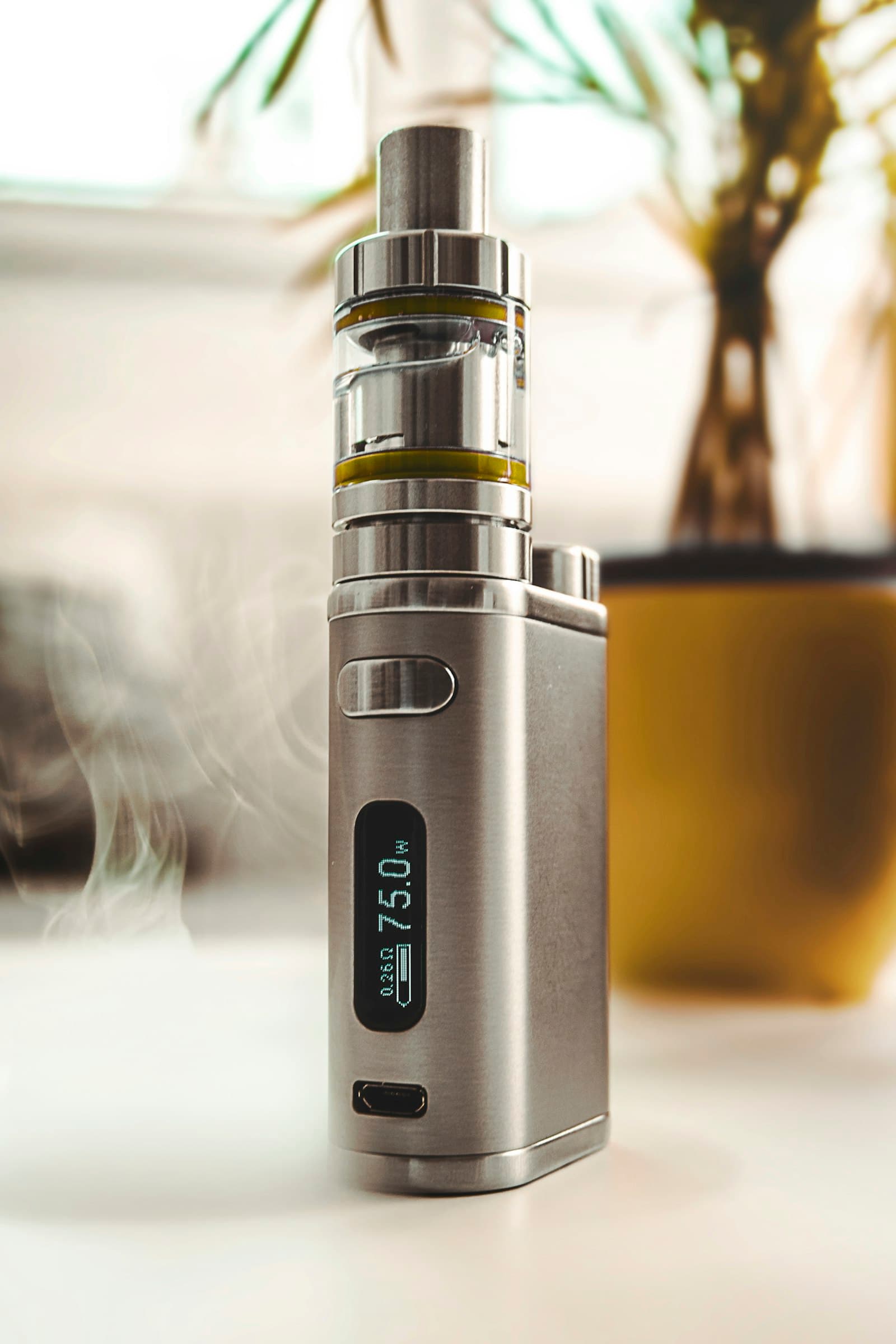
“Pod kit” and “sub-ohm kit” get used loosely in vape shop conversation, but on a spec sheet they describe two genuinely different pieces of hardware. The split is not just marketing: it comes down to wattage range, battery format and airflow design, and each of those choices pulls the device toward a different type of vaper. This guide sets out the factual differences without pretending one category is objectively better than the other.
What actually defines the difference
A pod kit is built around a small, usually sealed or semi-sealed pod that clicks or screws into a compact body. A sub-ohm kit pairs a separate tank, capable of holding coils with resistances below 1 ohm, with a larger mod body designed to drive more power through that coil. The word “sub-ohm” refers specifically to coil resistance under 1.0 ohm, which is why these kits need higher wattage and current-handling capability than a typical pod system.
Chipset and wattage range
Pod kits are usually built around simpler chipsets, often fixed or with a narrow adjustable wattage band, commonly somewhere in the 5–25W range depending on the model. This suits the lower-resistance-tolerant, higher-resistance coils typically used for a mouth-to-lung (MTL) draw, where less power is needed to produce a satisfying amount of vapour.
Sub-ohm kits generally carry more capable chipsets with a wider wattage window, often somewhere between 40W and 220W depending on the model and cell configuration, plus features like adjustable temperature control or preheat curves on higher-end devices. Manufacturers publish these ranges on the box and in the datasheet, but the exact figures vary between models, so always check the specific product rather than assuming a whole category behaves identically.
Battery format: internal vs removable cells
Most pod kits use a built-in, non-removable battery, charged directly through a USB-C port on the device itself. Capacity is usually modest, often in the few-hundred to low-thousand mAh range, which is generally enough for a device drawing single-digit to low double-digit wattage.
Sub-ohm mods more frequently use removable 18650 or 21700 cells (the numbers refer to the cell’s physical dimensions), which can be swapped out and charged externally in a dedicated charger. Some sub-ohm-capable mods do use an internal battery instead, so this is a spec to check rather than assume. Removable-cell devices give you a spare battery for longer days out, but they also mean you are responsible for buying cells with an appropriate continuous discharge rating and looking after them properly (see our battery and charging safety guide for the basics).
Airflow control and draw style
Pod kits are usually tuned for a mouth-to-lung (MTL) draw: airflow is restricted, mimicking the resistance of drawing on a cigarette, and pods are limited to 2ml of e-liquid capacity under UK regulation (the Tobacco and Related Products Regulations cap refillable pod and cartridge capacity at 2ml, and bottled nicotine-containing e-liquid at 10ml, details set out on GOV.UK).
Sub-ohm tanks typically have a wide-open, adjustable airflow ring or slider, built for a direct-to-lung (DTL) draw, more like breathing directly into the lungs. This produces denser vapour and is generally paired with higher-VG e-liquid, though tank capacity itself is not restricted by the same 2ml pod rule that applies to sealed pod cartridges. See our guide to what adjustable airflow actually changes for how opening or restricting that ring affects draw resistance, flavour and vapour temperature.
Who each category tends to suit
| Factor | Pod kit | Sub-ohm kit |
|---|---|---|
| Typical draw style | MTL | DTL |
| Typical wattage | 5–25W | 40–220W |
| Battery | Internal, fixed | Often 18650/21700 |
| Juice capacity | 2ml (UK regulated) | Varies by tank |
| Typical size/weight | Pocketable | Larger, heavier |
In our view, pod kits generally suit vapers who want something discreet and simple, particularly those who came from smoking and want a similar restricted draw. Sub-ohm kits tend to suit vapers who already have some experience and specifically want higher vapour volume or the flexibility of swapping coils and batteries. Neither is inherently the “better” device; they are built for different priorities.
Newer rechargeable pod kits with replaceable pod modules, such as the Al Fakher HyperMax Prime 50K, still sit on the pod kit side of this split: fixed internal battery, sealed pod, no adjustable airflow. What differs from an older-style pod kit is that the coil is swapped with every pod change rather than wearing down across one fixed coil, which is worth checking on the spec sheet alongside the wattage and battery figures covered above.
Reading the spec sheet before you buy
Category labels are a starting point, not the full picture. Two pod kits can have meaningfully different wattage ranges, and some newer “pod mod” hybrids blur the line by offering sub-ohm-style power in a pod-shaped body. Our guide to comparing vape device specs walks through exactly which numbers on a manufacturer datasheet are worth checking before deciding between categories, including resistance range, battery capacity and chipset features.